Monday, October 7, 2013

Scavenger Hunt


A few months ago I had the opportunity to watch a very interesting documentary about how biologists and hunters in California are collaborating to save the California condor from extinction. 

“Scavenger Hunt,” was produced by Boise non-profit Wild Lens, featuring Chris Parish of The Peregrine Fund
The film is called “Scavenger Hunt” and is the first of its kind that I have seen that actually credits hunters for their conservation efforts.  At the same time, it is a very well done educational piece that explains to hunters the many reasons why they should consider switching to lead-alternative ammunitions (if they haven’t already). 

Of course, their main focus is to prevent species like the California Condor from going extinct, as they feed on carcasses that many times contain lead fragments.  These lead particles and fragments can also be consumed by hunters and their families.

Xray of a California Condor - Photo courtesy of The Peregrine Fund/Chris Parish
This film follows biologists that survey the condors and depicts what really goes on in the field.  They not only observe these birds from afar, but they track them extensively and capture each numbered bird once or twice a year to test their blood levels for lead exposure.  I don’t want to give away all of the details of the film, but unfortunately despite all best efforts, sometimes intervention comes too late.

Flying California Condor - Photo courtesy of The Peregrine Fund/Chris Parish
In 1981 there were only 21 California Condors left in the wild.  Today, through captive breeding programs and conservation efforts, those numbers have increased to over 200 in the wild.  That is a great improvement from where they were, but at only 200, the wild population is still at a huge risk for extinction. 

Adult Condors in nest cave - Photo courtesy of The Peregrine Fund/Chris Parish
The life of a California condor is not an easy one.  A pair must spend 57 days working on incubating an egg.  Then it takes 5 – 6 months of development before the chick is ready to try its wings.  The youngster may remain dependent on their parents for up to a year after fledging.  Wild Condors will usually only raise one chick every two years.  This one chick will take around 6 – 8 years to begin breeding attempts.  Reproductive rates are low for Condors, and much time and effort is dedicated by both the Condor parents and by biologists who try and do everything possible to make sure that the egg hatches, the chick fledges and one day has offspring of its own.

Perched California Condors, juvenile and adult - Photo courtesy of The Peregrine Fund/Chris Parish
The state of California banned the use of lead ammunition in 2008 in the 8 counties in which California Condors are found.  This has also helped reduce lead levels in other birds of prey, such as Golden Eagles and Turkey Vultures.  These 2 species have smaller territories and a more varied diet.  Banning lead ammunition in the 8 counties, though, does not seem to have improved things much for the Condors.  Condors can eat from 75 – 100 carcasses per year, and even a single exposure to lead can be deadly.  They can fly over 200 miles a day, which is beyond the counties in which lead is banned.

Of course, any time you mention guns or ammunition these days, people get uncomfortable and sometimes even hot under the collar.  I believe that this film fairly represents both sides of the issues, allowing the viewer to come to an educated and ethical conclusion of their own.

For more information on this film, Click Here.

For information about alternatives to lead ammunition,  Click Here.

For other resources about condors and lead, check out the Institute for Wildlife Studies Here.

Submitted by Billie Baumann, World Bird Sanctuary Outreach Coordinator

Saturday, October 5, 2013

Final Field Studies Report - 2013


The final tally is in and the overall success rate of the 2013 season is 58%.  With the nice weather we had over the season, it truly has been an amazing year; 764 eggs were laid in total with 440 chicks fledging.  This is a slight increase from the 2012 season, which had a 56% success rate.

Your author checking one of the nest boxes

It has been a decade now since the World Bird Sanctuary began working closely with Ameren Missouri to research the environmental impact of flora management in the Ameren Missouri utility line right-of-ways.  For those of you who don’t know, the primary focus of our work with Ameren Missouri is on the success rate of the Missouri native cavity-nesting songbirds and which management method, if any, has the most successful impact.

The three management schemes compared are spraying of herbicide, mowing of plant life and a combination of the two.  For the purpose of this study bird nest boxes have been installed on different Ameren Missouri utility structures to compare the nesting success of several native bird species.  The outcome of these nesting attempts will help indicate which management scheme is most beneficial for the birds residing in the area.

Monitoring of boxes began on the cold morning of March 15, 2013 and concluded on August 15, 2013. 

A Bluebird chick ready to be banded

Nest boxes were checked on a weekly basis.  Each box was opened and checked for a nest. When nests were discovered, the type and materials used to make it were recorded.  If eggs or chicks were present, they were banded and the number, type, and a brief description were recorded.  If chicks were of banding age, the US Fish and Wildlife band was placed on one of its legs, and the number, size, date and location were recorded.

The birds typical to the study are the Eastern Bluebird, Carolina Chickadee, House Wren and the Eastern Tufted Titmouse.

A Bluebird nest with Turkey feather woven in

Eastern Bluebirds live about 4-5 years and typically lay between 3 and 5 eggs.  Eggs are incubated for 13-16 days and the chicks fledge 15-20 days after hatching.  They make a nest of dried grass and small twigs lined with feathers, hair or fur.

House Wrens live about 5 years and lay 6-8 eggs in a nest of twigs lined with fur and even snakeskin.  Incubation lasts 13-15 days and young leave the nest between 12-18 days after hatching.

Carolina Chickadees live approximately 4-5 years and lay between 5 and 8 eggs.  Incubation of the eggs requires 11-13 days and nests consist of soft materials such as fur, feathers and moss.  Chicks fledge the nest 13-17 days after hatching.

This is the project I have been working on this summer, and this has been one of the best summer jobs I have ever had.  I just want to thank everyone at the World Bird Sanctuary and Ameren Missouri for the opportunity.

Submitted by Neal Cowan, World Bird Sanctuary Field Studies Supervisor

Thursday, October 3, 2013

World Bird Sanctuary Is YOUR Bird Sanctuary


For over 37 years World Bird Sanctuary has been serving the communities of Missouri and beyond, protecting bird species and their habitats.  Our success in this endeavor is due to the dedication of our staff and volunteers, and the members of our community who invest in our mission.

World Bird Sanctuary has many fun and memorable ways for you to show your support – and most of them are as easy as a few clicks on your mouse!


Return to the Wild!  Buy a gift certificate for the release of a rehabilitated bird back into the wild.
Treating a wild bird of prey admitted to our wildlife hospital can cost up to $1,000.  This special gift certificate entitles the recipient to take part in the release of a rehabilitated bird back into the wild.  Invite family and friends to release a bird of prey at your home or nearby park.   The World Bird Sanctuary Wildlife Hospital is a cornerstone of the World Bird Sanctuary, and is entirely funded by donations from the public.  Help us give our patients a second chance to fly.  Buy a Return to the Wild! Gift Certificate today!

$150.00.  Click here to order your Return to the Wild! Gift Certificate, or email Catherine Redfern, or call 636-225-4390 ext. 102.


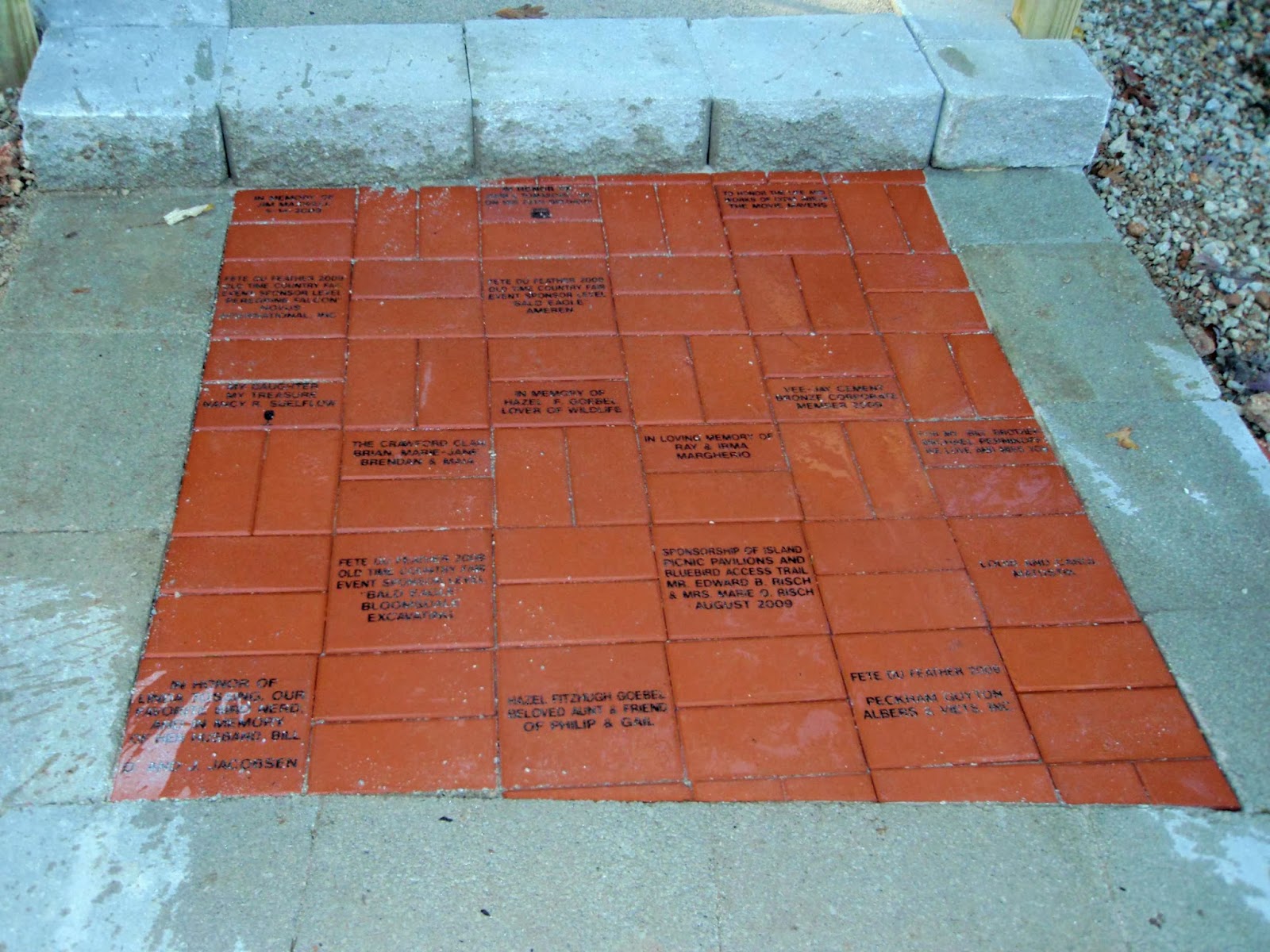
Help us Pave the Way!   Buy-a-Brick and help us pave our amphitheater while leaving a lasting impression of your environmental values! 
Your brick will be laid in our amphitheater.  Each year our environmental education programs teach thousands of people how to make small everyday changes that will have a lasting environmentally sustainable impact for years to come.  Your purchase of one of our engraved bricks will allow us to achieve this goal, while providing you with a new and lasting way to recognize loved ones or commemorate special occasions.

Options range from $125 - $425 
Click here to order your Engraved Brick.


Adopt-a-Bird! Make someone special the proud adoptive parent of one of over 200 animals at World Bird Sanctuary!
Your adoption fees help us care for your animal for one year, as they live at the Sanctuary and travel around the country, teaching thousands of people about how to protect their friends in the wild and their habitats!  Your adoption packet includes a Certificate of Adoption, photographs and natural histories of your adopted animal and special visiting privileges.

Adoptions range from $25 - $150. 
Click here to see our gallery of animals available for adoption. 


Give the Gift of Friendship!  A "Friend of World Bird Sanctuary" Gift Subscription is the gift that keeps giving all year!
Give the gift of friendship by giving your friends or family a gift subscription as a World Bird Sanctuary Friend.  WBS Friends receive invitations to "Friends only" events, and a membership card gives Friends a 10% discount on program fees at World Bird Sanctuary and on any item in our gift shop.

"Friends" subscriptions range from $35 - $100. 
Click here to sign a friend or family member up for the "Friends" program.


”Save the Future” and “All Along the Watershed” Children’s Music CDs.
World Bird Sanctuary's in-house band, The Raptor Project, has released its first CD, Save the Future, and the follow-up CD, All Along the Watershed.   Each CD consists of original songs about birds, the environment and taking care of our planet.  These fun and entertaining children's CDs come with lyric sheets and education sheets embedded in the CD.  All proceeds from the sale of these products go directly to treating and caring for animals in our wildlife hospital.

Each CD - $12 plus $3 shipping and handling.
Click here to order.

Your support helps us continue to successfully achieve our mission year after year.  We appreciate your support and your faith in us to preserve birds and their habitats.
  
Remember - World Bird Sanctuary is your bird sanctuary

Submitted by Catherine Redfern, Director of Development, World Bird Sanctuary.


Tuesday, October 1, 2013

Open House--Save The Date!


Save the Date for WBS’ Annual Open House!
FREE!  Bird Shows!  Concerts!  Naturalist Talks!  Kids Activities!

As temperatures cool down the activity at World Bird Sanctuary is heating up.

Meet one of our Red-legged Seriemas, native to South America

Fall is in the air; the leaves are beginning to turn; and World Bird Sanctuary's Open House event is just around the corner!  Open House coincides with the Fall bird migration - and this year at Open House, we are giving you a closer look at which native birds you might come across as they head south for the winter!  That's right - it's a celebration of birds from the southern Hemisphere - where you'll get to meet birds that you won't find anywhere else in the mid-West!

Those in the know will tell you that the WBS Open House is one of the most entertaining Fall events in the St. Louis area.

See one of our beautifully marked King Vultures

It's all about What We Do!
Open House is your opportunity to learn first-hand all about World Bird Sanctuary and the work we do to save threatened bird species and their habitats.  Special activities include:
  • Behind-the-scenes guided tours of our breeding barn, animal behavioral and training center and the wildlife hospital.  These areas are closed to the public for the rest of the year.
  • Shows featuring live animals native to the southern hemisphere presented in our amphitheater three times daily, including: Red-legged seriemas, king vultures, flying macaws, talking parrots, bateleur eagles, tawny eagles and more!
  • Raptor project concerts.
  • Photo opportunity - have your photograph taken while holding a live owl!
  • Craft activity center for kids, and special kids programs featuring live animals!
  • Be sure to catch the bus to the "Lower Site" where you will meet special birds in our endangered species breeding program and our animal behavior and training center).
Here's what you need to know:
  • Saturday 19th and Sunday 20th October, 2013 
  • 10:00am - 4:00pm
  • Admission and Parking is FREE.
  • Free adults and kids activities!

Sponsored by:


We hope to see you here soon!

Sunday, September 29, 2013

Northern Saw-whet Owl Banding Friend Program


 Are you a Friend of World Bird Sanctuary? Do you love owls? Are you interested in learning about bird banding? If you said yes to these questions then we have an opportunity for you!

Last fall World Bird Sanctuary joined Project Owlnet.  Project Owlnet  is  an organization that works to monitor owl population trends by mist netting and by banding migrating owls, especially Northern Saw-whet Owls.  The results are compiled and used to determine when and where these migrant owls are moving. 

Aspen - WBS's resident Saw-whet Owl

For the first time in the history of our site World Bird Sanctuary trapped and banded Northern Saw-whet Owls in 2012.  In fact over the course of the owl banding program the team trapped, banded and released a total of seven Northern Saw-whet Owls.  Our team is going to be at it again this year and would like to invite World Bird Sanctuary Friends to join them and learn more about this important program.
 
To experience the trapping and banding of wild Northern Saw-whet owls you must be a Friend of WBS.  Not a Friend? It is easy to join us in our mission.  Just click on this link to join!  http://www.worldbirdsanctuary.org/index.php/

Details about the Northern Saw Whet Owl Friend program:

Friends must pre-register for this fun program by calling 636-225-4390 ext: 106.

Limited space is available on the following Thursdays:
October 24
October 31
November 7
November 14
November 21

Time: 5:30pm-7:30pm

Age: 10 and up

Due to space constraints this event is limited to one Friend and a guest of their choice.

Please feel free to bring your camera but be aware for the owls’ safety flash photography is not allowed.

Due to the nature of owl migration there is no guarantee that you will see a wild Northern Saw-whet Owl.

This program is weather dependent and may be cancelled due to inclement weather.  Every effort will be made to reschedule.

Dress for the weather and wear comfortable walking shoes. This program will be indoors as well as outdoors.

For the safety of the owls no flashlights please, World Bird Sanctuary representatives will provide any necessary lighting.


Friday, September 27, 2013

Project Owlnet Report - 2012


Last year (2012) the World Bird Sanctuary’s Bird Banding Team embarked on a new and exciting project!  Following is team leader Linda Tossing’s report on the outcome of this new venture.
“World Bird Sanctuary – Project Owlnet – 2012
Aspen - WBS's resident Saw-whet Owl
“After visiting a Northern Saw-whet Owl (NSWO) banding station in Omaha, Nebraska during the 2012 Inland Bird Banding Association’s conference in Omaha, NE, the World Bird Sanctuary’s Banding Team asked the following questions:
“1.    Are there NSWOs in St. Louis, MO, especially in the Meramec River Valley? 
“2.    When do they migrate through? 
“3.    Are there NSWOs that winter in the valley?
“So we set out to answer some of these questions!   First thing we did was to get some training!  Representatives from the WBS Banding Team went to visit Dana Ripper and Ethan Duke of the Missouri River Bird Observatory, Marshall, MO.  We spent two nights with Dana and Ethan learning where to place nets, what equipment we needed, the procedures to band the NSWOs and what records to keep.  In the process, we banded 6 NSWO’s.   We also learned how much the weather impacted the results, and the importance of the wind direction!
“So the team came back and started conducting research.  We joined Project Owlnet, which is an organization that works to monitor owl population trends by mist netting and by banding migrating owls, especially Northern Saw-whet Owls.  The results are compiled and used to determine when and where these migrant owls are moving. 
“Along with WBS, there are two other banding stations in Missouri which are participating in the Project Owlnet - Missouri State University – West Plains (MSU-WP) operates one in St. Joseph and the Missouri River Bird Observatory (MRBO) has one in Marshall.  With our participation, we have the western, mid-state and eastern parts of the state covered.
“Based on information from Project Owlnet, we developed our plan!   We determined what was needed for equipment and then started collecting items such as special nets, a caller that played the male Saw-whet’s call, banding pliers, black light and bands!  We used the funds from a recent Inland Bird Banding Association Grant to purchase some of the equipment.  Cabela’s generously donated the caller. Then we started writing our banding protocols for the project (which were finalized at the end of the project!).   
“A north-facing site on a ridge overlooking the Meramec River was selected.  This site had some understory critical for migrating owls.   We set up 5 nets with the caller that continuously broadcasted the male Saw-whet call.
“The schedule was set to start November 12 and run nets 5 nights a week until December 9.  We would have 23 days of banding sessions in the required 30 day period.  “We started our sessions ½ hour after sunset and kept the nets open for 4 hours. Our first night of banding was Monday, November 12 and our first check of the nets at 6:13 PM brought us our first owl!  We were very pleased that we ended the night with 2 owls – we couldn’t believe our good luck!
“So, we answered our first question! – Are there Saw-whets in St. Louis, MO, in the Meramec River Valley?   During our banding sessions, we captured owls on November 12, 13 and the 25 - a total of 7 new birds and 1 that we had previously captured (otherwise known as a recapture in banding lingo).  We learned that weather did indeed drive our results.  We had birds on nights with northern winds and colder temperatures. 
“After November 25, we had no more owls.  Given the MRBO and MWSU’s results, we feel we missed the early part of the migration (the answer to our second question).  We can suppose the terrain and understory of our banding site is not appropriate for wintering grounds (our third question).  Northern Saw-whet Owls prefer coniferous trees for winter cover.     However, more research is needed for conclusions. For 2013 we are adjusting our schedule and will start earlier!  We look forward to this year’s results!”


Thursday, September 26, 2013

Myakka


It is with a heavy heart that we must inform you that one of our longtime residents, Myakka the Bald Eagle, has succumbed to a combination of old age and, we suspect, the debilitating effects of lead poisoning. 


In 1985 Myakka’s family nest was on the Myakka River in Florida.  His parents had three eggs in the nest.  Often in the wild when there are more than two chicks one will be pushed out of the nest by the larger siblings.  Therefore, Myakka’s egg was removed and hatched at the G.M. Sutton Avian Research Center in Bartlesville, Oklahoma as part of an effort to re-establish a wild population of Bald Eagles in Alabama.

After a successful release Myakka was injured in the wild by a gunshot.  He took three shotgun pellets--two to his left wing, which eventually healed completely.  At a rehab center in Minneapolis it was discovered that he had sustained permanent damage to one eye from another pellet, and because of that pellet’s position in Myakka’ head, it could not be removed.  In the wild this would have been his death sentence.  At the end of 1986, when his injuries had healed sufficiently he was transferred to the World Bird Sanctuary.

Even though he still carried the lead shot that caused his eye injury Myakka was a real trooper.  He integrated well into the routine of becoming an ambassador for his species, and over the years educated millions of people about the threats to his kind from human activities, and some of those activities’ thoughtlessness.

We believe that his demise was brought about in great part by the lead shot which he had carried since his injury.  Even though his injury had occurred many years ago, the lead was still in his system and we believe it finally had broken down enough to carry its poison to vital organs.  

Last week he began having trouble with balance and coordination, and then began to experience severe seizures—classic symptoms of lead poisoning.  When it became apparent that nothing we could do could help him it was decided to humanely euthanize him rather than let him suffer. 

Myakka will be sorely missed by one and all.

Wednesday, September 25, 2013

Audience Questions


“You have the coolest job.”  “I want to be just like you when I get bigger.”  “You must love coming to work every day.”  “I love seeing the birds!”  These are just a few of the comments World Bird Sanctuary bird show presenters hear every day.  And I must tell you, it never gets old!

Cupid the American Barn Owl flying into trainer's glove - photo by Lisa McCabe

However, there is something even better than compliments.  And what’s that, you may ask?  The questions!  From my two years’ experience working with birds at World Bird Sanctuary’s Milwaukee County Zoo bird show and five years of working in a zoo, I have found that questions from the general public about animals can be broken up into 3 categories.
 
Buford the Bald Eagle out in the public display area - photo by Erica Fenske


General Animal Questions.  These common questions are usually about age, species, or name.  Every once in a while though you get the really good ones--the ones that challenge you as a trainer.  With only two years under my belt, I get challenged every day.  But the wonderful thing about being challenged is that it gives me an excuse to ask even more questions!  If someone asks me how many feathers are on a bird’s head, I ask my supervisor how many are on their entire body.  If someone asks what a bird eats, I ask specifically what species.  No matter how much I learn there is always something more to learn!  I ask questions every single day and as much as I can to improve myself, so I can improve how I do my job.


How Can You Do This?  As weird as it sounds, I enjoy answering these.  No matter which species you work with, you sometimes get a “non-zoo person” who can’t fathom the idea of animals in captivity and find our career choices as “wrong.”  You can’t help but be frustrated at first, but that is why we do what we do.  Having the animals on display only fulfills part of their duties as ambassadors of their species.  We are here to fulfill the other half by explaining to people how they are doing it.  No, we don’t take perfectly healthy animals out of the wild.  No, they are not miserable.  Yes we take the best care possible of them and give them the best lives they could ever imagine.  Explaining these concepts, one person at a time, makes me feel like I am making a difference in the world.  And, hopefully if we educate enough people, we can help animals everywhere.

Scarlett the Red Shouldered Hawk - photo by Erica Fenske

How Do I Get a Job Like This?  Now THIS is my favorite question.  I love when children/young adults ask me this question because I wish I had asked it more myself when I was their age!  It shows that people care and more people out there want to serve our purpose--to educate the world about these amazing and beautiful creatures.  By now I have my basic response--get a science related college degree, do lots of volunteer/internship work, and most of all, have lots of determination.  Even though it is such a basic response, no one ever walks away looking discouraged, and that is the best feeling in the WORLD!  Yes, flying a Bald Eagle is a pretty amazing feeling, but knowing I might have just inspired someone to help eagles fly longer in the wild is a much cooler feeling!

So all in all, always ask questions.  And if you don’t know the answer, ask even more questions.  Questions are limitless and no one should ever stop asking!  A very wise teacher once told me that, “Any day that you don’t learn something new is a wasted day.”

Submitted by Erica Fenske, World Bird Sanctuary Seasonal Zoo Show Staff Member


Monday, September 23, 2013

Only Two More Hikes Remaining This Year


Have you booked your family onto World Bird Sanctuary's family-friendly guided nature hikes yet?

Join us for a leisurely 2-hour hike through our oak hickory forest to see what kind of nature is in our woods.
If you feel like you're being watched--look up
An expert naturalist will lead you on your hike – where you may see birds, reptiles, amphibians and mammals.  Learn about trees, rocks and who knows what else!

Each hike will be a new experience depending on the season and creatures we encounter.

Time: Hike starts at 9am.  Registration at 8.30am.
Dates: Every fourth Saturday of the month from April until October.
Dates Remaining:
September 28th
October 26th
Red-bellied Woodpeckers inhabit our woods
Cost: $9 for adults; $7 for children under 12.  Groups of 10 or more - $7 per person regardless of age.

Reservations Required: Call 636-225-4390 ext. 0 to make your reservation and find out what nature is in your woods!

Dress for the weather and don't forget your binoculars and cameras!

Saturday, September 21, 2013

Field Studies Report July 2013


It sure has been hot outside.  I hope everyone is staying hydrated.  I know I sure am.  In spite of the heat, however, the birds are keeping busy.

It has been an amazing season.  Since March over 300 birds have been banded and I expect many more in the next week or two.  I have gotten better at getting to nests before the chicks strike out on their own.  Only 48 birds have fledged before a band could be placed on them.  In general, the baby birds are big enough to be banded ten days after hatching, and will fledge (that is, fly away from the nest) within the next week.  However, there are a few factors that can shorten, or lengthen this time scale.  Well-fed babies can fledge several days earlier.  On the flip side; if the parents are having a hard time finding food for them, it can take much longer for their young to fledge.
Baby Eastern Bluebird

The Eastern Bluebirds and the House Wrens are neck and neck in their dominance in the field, with the boxes almost evenly split between the two.  The Eastern Bluebirds are now on their third clutch while the House Wrens have just started their second clutch.   That is to say, the Eastern Bluebirds have started a nest and raised chicks three separate times.  Carolina Chickadees and Eastern Tufted Titmice finished up the season after just one clutch.
 

Sadly, all things must come to an end.  The 2013 summer season is starting to slow down.  Soon the birds will begin preparing for the winter and the nesting season will end.  There are many more nests out there now, but this may very well be the last clutch of the year.

The Eastern bluebirds and House Wrens are both migratory species.  Bluebirds will finish up their last clutches, then head into the woods and begin fattening up for the winter.  Most will migrate south; a few will tough it out here.  In contrast all the House Wrens will move to warmer climates at the first hint of frost.  You aren’t likely to see them messing around in the cold.

Carolina Chickadees and Eastern Tufted Titmice will hang around throughout the winter.  Both are clever foragers and know what it takes to survive the winter.  Now is the time to be cleaning up the feeders and getting them ready for the really heavy winter bird feeding months.

It has been an excellent year for the Ameren Mo nest box study.  I have been able to collect a lot of valuable data.  The success rate is excellent and with this good weather and plenty of bugs to eat the birds couldn’t be happier.  As you all know the purpose of this study is to keep an eye on the environment in the Ameren Mo right-of-ways, and it looks like the environment is in good shape this year.  We are very thankful to Ameren  Mo for their support and concern for our feathered friends.

Submitted by Neal Cowan, World Bird Sanctuary Field Studies Supervisor

Thursday, September 19, 2013

"Peent"


“Peent” is the vocalization of the Common Nighthawk.

Recently I stumbled upon the nest of a Common Nighthawk while on a rooftop of an office building.  I knew that I had found a Nighthawk nest site because the mother was dragging her wings on the ground and running erratically away from the site trying to draw me away from her babies. Once I realized what she was up to I paused and looked to the ground to try and find the nest site and just a few feet to my left sat two eggs near a discarded piece of wood. After a few photos of the nest site I left quietly so as not to disturb her. In the weeks to come I frequently visited the site to see and observe the development of the young and their mother.


 The female Nighthawk trying to decoy me away from her eggs 
The behaviors of the Nighthawk are very different from most birds. The physical appearance of the Common Nighthawk is described as a small bird with long slender wings, large head, and a small bill but with a large gaping mouth when opened and lined with bristles to help capture prey. The coloration is filled with different shades of greys, browns, and white and is designed to camouflage and break up their appearance.
  
Often times Nighthawks are seen near baseball fields, well lit parking lots, and any area with bright lights at dusk and again at dawn where they feed on up to 600 individual flying invertebrates a night.

This bird species has one of the largest migration patterns of any North American Bird. Nighthawks travel South in the winter to as far as Chile and then travel back as far north as Alaska in the summertime.

The breeding season is in mid spring to early summer, and the males will court females by flying upwards of 700 feet and diving to the ground, opening their wings, sometimes just feet from the ground. As the males open their wings they create a deep booming noise that is similar to the noise of a car passing by at a high speed.

Nighthawks blend in very well with the gravel they choose for their nesting area 
Normally only producing 2 pale colored eggs speckled with grey, the females will typically nest in an open area with no nesting material--on gravel roof tops, in urban settings, and in open fields or near water in more uninhabited areas.


Nighthawk chick and an unhatched egg—even from a few feet away they're almost impossible to see 
I have to say that keeping an eye on the two little ones was truly a gratifying experience. Astonishingly a very short experience--from the time the eggs were laid to the time the two were making short flights on the rooftop was only 30 days.

The last time I saw the babies was about a week ago. I had walked around an air conditioning unit and spooked them so they took off and caught the wind and were out of sight in no time.   

Submitted by Adam Triska, World Bird Sanctuary  Naturalist/Trainer